Wednesday, September 26, 2018

AN ELEVATOR TO GOD (ok, to space because we don't actually know where heaven is located) IN OUR LIFETIME! (Not yours though baby boomers)

Blogger note: This original post was published almost 5 years ago... but amazingly, it is now a doable thing to cheaply deliver people, supplies to the International Space Station AND BEYOND! Read this post because it is accurate and good... but then read the addenda at the end which adds a few more truly amazing facts, though some information on Elon Musk has changed to date.
 

SciFi author Arthur C. Clakre wrote about it in his 1979 novel The Fountains of Paradise and it WAS science fiction then... but not any more. There are scientists who think it can be done--and it could be a reality in this century, possibly as early as 2050.

Now that's pretty impressive!

Spoiler alert: much of the technical language is not understood by mere mortals. It is included to impress you so you think I do.)

"It's a phenomenal enabling technology that would open up our Solar System to humankind," says Peter Swan, President of the International Space Elevator Consortium. "I think the first ones will be robotic, and then 10-15 years after that, we'll have six to eight elevators that are safe enough to carry people."

The concept is simple. First, you would need a landing station that, let's say, would be the equivalent of floor 12,000,003 (avoiding the 13th floor, of course). That landing station, maybe called God's Little Acre, would be a satellite or space-debris platform in geosynchronous orbit with the earth--a floating anchor, so to speak--and there are lots of possibilities out there.

Earth station would best be about 600 miles west of the Galapagos Islands because of the rarity of hurricanes, tornadoes and typhoons in that area, say those smarter than me.

Then you need a very strong cable--which doesn't yet exist--running between the two. There are now several concepts that would produce a cable with sufficient strength. One is a diamond-like nanothread material. Another is a cable made of carbon nanotubes with a tensile strength of 63 gigapascal--about 13 times stronger than the toughest steel. And that cable would need to be about 60,000 miles long. (Remember, up AND back with a counterweight and/or maglev technology similarly as used on high-speed trains.)

Oh, and we'd have to dig up an extra $100 BILLION or so.

Now here's the kicker... IT IS POSSIBLE, say many involved with the knowledge and desire to do it. But how does one go from concept to reality?

The reason we would do this? It would be incredibly less costly to send stuff to space... and from this platform, the universe would open to us as never before. 

Elon Musk, one of the most fascinating people of today, has offered his say. He is the genius behind SpaceX which develops and launches space vehicles, CEO and chief product architect of Tesla Motors. He is also the founder of SpaceX and a co-founder of PayPal and Tesla Motors. He has also envisioned a conceptual high-speed transportation system known as the Hyperloop.

With Hyperloop, Musk envisions 'shooting' people from Los Angeles to San Francisco in a metal tube in just 35 minutes. How's that for a starter? But regarding the space elevator, he says it would be easier to "have a bridge from LA to Tokyo." So what does he know?

Interestingly, as bizarre as this seems, remember that the Wright brothers' first flight was in 1903. Who then would have visualized humans would land on the moon just 66 years later--less than a lifetime!

As Groucho Marx said, "Time flies like an arrow, fruit flies like a banana."

Special updated info... this is not only doable but in the planning stage!

Lead from the Wall Street Journal, Sept., 2018

"Gradually you accelerate upward, reaching a cruising speed of several hundred miles per hour. Your elevator car moves up a cable 100 million times as long as it is wide--connected on one end to a platform in the ocean (Ed. comment--See, I told you so) and, on the other end, to a counterweight, a heavy mass orbiting high above the planet--kept taut by centrifugal forces. It takes about two weeks to reach the top of the cabl, some 60,000 miles above the Earth's surface. But the trip is serene, with none of the G-force of a rocket ride."

The elevators would be able to carry people and supplies to space without the need for a space shuttle and the special skills required of its occupants to fly it... and at much less cost! But really, can we do it?

Yep, it is technically possible... and as we do more, we learn more and have the advantage of all the discoveries to follow by the target year, 2050. A Japanese firm is already working on it and says do-ability by 2035 is target.

Well, then all we need is that little bit of competition to do it first. A NASA-backd company won the battle to try.

In a word, WOW! 


Thursday, September 13, 2018

All The News That's Fit to Print: Eulogy for a dying media

The NYTimes and one of its special inserts


It was Benjamin Harris of Boston who, in 1690, published Public Occurrences, the first newspaper in America. While it lasted just one issue, it was the beginning of the most informative media ever.

This is a look at that media in all its glory, the irony being that as it gets better, it still dies in the hearts and minds of today's world, replaced by the internet, that snot-nosed little kid, Social Media and its siblings.

Newspaper readership today is just half the number that read in the mid 1970s. And of those newspapers, less than half are today published daily.

Newspapers, however, still have a unique place. They are overwhelmingly honest and sincere in coverage of all the news, no matter how they are tarred by the President.  They are honest, albiet with an editorial voice that expresses a specific view point at times. There is no made-up news, quite unlike social media where users are allowed to say anything without check.

All newspapers have suffered the loss of readers and advertisers by glitzier competition that does have its place, but nothing covers more local and national news as newspapers,  Today's people just have more options to choose from and more things to do than read a newspaper. That's life.

However, to salute the power to be important, there are few that do it as well as The New York Times, The Washington Post, The Wall Street Journal and others like them, most in major markets where there is the population and are advertisers that help make them go.

Where I live, my very fine local paper is published only twice a week. It covers important local news really well. But I still fork out $6.41 every Sunday for The NY Times. It remains a full-day read of 5 or 6 sections, feature stories as well as news, plus a  highly regarded book review magazine and The NYTimes magazine with a crossword that could last far longer. No comics though.

It has many special sections like the impressive one shown here, Sunday In the Park, a 16-pager pulled together by 10 photographers and reporters to feature all 117 people enjoying the Sheep Meadow section of Central Park in the heart of Manhattan on a warm summer Sunday. It is filled with special interest and people personality... and the tiny stories that wouldn't see the light of day if it weren't for newspapers. It is a treat to enjoy. Take that Facebook. Newspapers have staff to do that stuff... and be held responsible.

Here's how the pros do it

The overview of A Sunday in the Park, 4 feet wide unfolded
The other side... the people close up with comments
Another take on newspapers: Today's Riddle: What is black and white and red all over?

Sunday, September 9, 2018

Is it all in the music? Hope not!


Take it from a guy who can't carry a tune, these one hit wonders had this take on where we are headed as a people way back in 1969. In the Year 2525 topped the Billboard Hot 100 charts for six weeks, maybe because it had that perfect melody and mood for the time but more because it was a haunting look at a future that can't be fully imagined until we are half-way there, almost 500 years early according to the song.

"Its overriding theme of a world doomed by its passive acquiescence and overdependence on its own overdone technologies struck a resonant chord in millions of people in the world in the late 1960s, " says Wikipedia.

Imagine... in the 1960s there was evidence, even years before personal computers were sold, let alone the cell phone which now puts 1,000 time more computer power in your hand than the units first used to send man into space. Of course we did have Popular Science Magazine, (founded in 1872) and the like, which became outlets for ideas and writings of Charles Darwin, Thomas Edison, Louis Pasteur, Thomas Henry Huxley, Henry Ward Beecher and other brilliant minds. We were dreamers than and now.

And look at how far we have come: Artificial Intelligence (AI) is the name of the game. Robots doing everything imaginable, Cars, trucks and plane driving and flying themselves, The capability to print body parts ... and guns too, Social media and the capability to know everything about everybody, Global warming... and we are still a long way away from a full roll-out of what might, could, or will be done for good... and the not so good alike. I think that is called unintended consequences.

Wanna see? Here are the lyrics:

In the year 2525
If man is still alive
If woman can survive
They may find
In the year 3535
Ain't gonna need to tell the truth, tell no lies
Everything you think, do, and say
Is in the pill you took today

In the year 4545
Ain't gonna need your teeth, won't need your eyes
You won't find a thing to chew
Nobody's gonna look at you

In the year 5555
Your arms are hanging limp at your sides
Your legs got nothing to do
Some machine is doing that for you

In the year 6565
Ain't gonna need no husband, won't need no wife
You'll pick your son, pick your daughter too
From the bottom of a long glass tube' Whoooa

In the year 7510
If God's a-comin' he ought to make it by then
Maybe he'll look around himself and say
Guess it's time for the Judgement day

In the year 8510

Judgement Day by Willirm de Kooning in the National Gallery

God is gonna shake his mighty head then
He'll either say I'm pleased where man has been
Or tear it down and start again

In the year 9595
I'm kinda wondering if man is gonna be alive
He's taken everything this old earth can give
And he ain't put back nothing

Now it's been 10, 000 years
Man has cried a billion tears
For what he never knew
Now man's reign is through
But through eternal night
The twinkling of starlight
So very far away
Maybe it's only yesterday

In the year 2525
If man is still alive
If woman can survive
They may thrive
In the year 3535
Ain't gonna need to tell the truth, tell no lies
Everything you think, do or say
Is in the pill you took today....(fading...)

And the song as sung by Zager and Evans.

Yep, sometimes songs tell a story that rings too true to enjoy. 

Blog note: I'm hardly ever this dark but when reminded of this song, I couldn't help myself but to draw an eerie parallel. However, as a glass half-full person, this is only an observation in time. But it does feel we are moving ever faster down that path.

Tuesday, September 4, 2018

John McCain, SNL host and star


It's not often we see a politician turn comedian and be really good. This is not one of those times... but it it a view into the SNL life of a great man with a healthy sense of humor.

This clip has a few of his skits when he hosted Saturday Night Live in 2002. He wasn't the best host ever, but what he was, is plenty good enough. He not only hosted  SNL but he had numerous other cameos that were seriously funny. See the clip below for when he sings Streisand and other bits of gold.

There has been an outpouring of love and affection for McCain because he has truly earned the honor and respect of most people... unless you are somewhat in the dark or President of the United States.

A current documentary of his life includes rare footage of the 5 1/2 years he spent in "Hanoi Hilton," perhaps the harshest and most dreaded prisoner of war compound known during the Vietnam War. How anyone could have sustained through what McCain and all the other brave men to suffer such a plight is unimaginable for most of us. I actually met and heard a speech given by the next P.O.W. to arrive after McClain and he spoke of those times and the will and spirit to sustain with honor. Two full years of solitary confinement and torture... and then 3 1/2 more. Really!

Then, as a public servant of highest regard for the rest of his life. Who could ask for more?

McCain believed in cooperation and compromise with others for the better good of all. Sadly, there are few like him remaining.
  
"Ameria didn't invent human rights. Those rights are common to all people: nations, cultures, and religions cannot choose to simply opt out of them. John McCain

And talk about McCain singing Streisand and more, you really should watch this.

We will miss you, John McCain... both Republicans and Democrats, Independents and almost everyone else, save one, we shall miss you.

LAST BIT OF HIS WISDOM: "If you want to persevere--and I am very serious now--if you want to preserve democracy as we know it, you have to have a free and many times adversarial press. And without it, I am afraid we would lose so much of our individual liberties over time. That's how dictators get started." John McCain

Monday, August 20, 2018

This and that... and 76 ducklings

Every good blog needs a "grabber" to pique your interest. So how are 76 ducklings all in a row? "Aww... " you say?

It's good to say "Aww" once in a while, but with no adorable cat pictures handy, how is that possible? That's where76 ducklings with one mama duck comes in. I'll tell you all about the ducklings in a minute. 

Newspapers use to do this all the time... catch your broader interest, I mean. I remember newspapers. Big and bulky pages with ink that sometimes gets on your hands or clothes, lots of words, lots of stories big and small, (and a comics section in most) almost always reported in greater depth than in social media and television (if they even made the cut).

Some of the tid-bits I read in newspapers lately:

  • Almost one in five teachers quit teaching within their first five years. And it's not because they made so much money that they could retire. Sadly, few teachers are, in this vital full time profession, able to support a family on that salary. As a people, we value education highly, but almost never vote to fund for the value it is.
  • The common border we share with Canada is the longest international boundary in the world... and as a P.S., Canada also has a Muslim population of more than one million. 
  • Sharks can turn their stomachs inside-out.
  • Venezuela's inflation rate is expected to exceed one million percent by year's end.
  • An impressive home in the west just went on the market for $14,999,999.99. I'll bet people will be jumping on a chance to buy this place for less than $15 million, because who can afford a $15 million house? And like that, a home in 'The Hamptons' sold a while back for $137 million--the highest price so far for a U.S. home. And I hear it was bought as a tear-down.
  • Mary Ellis died at 101... she flew 400 Spitfire fighter planes and 76 other aircraft to the front lines in World War II."Everyone was flabbergasted that a little girl like me could fly these big airplanes."  and Doris Arndt, who was a well known circus animal trainer commanding tigers and lions and bears, (Oh, my...), died at 88. Wonder Women have always been with us but it seems so many still have not noticed.
  • And you get the most interesting classified ads:


 See what you can learn in newspapers that you might miss elsewhere

Oh, about the mama duck and ducklings.... they are common mergansers and females lay their eggs in multiple nests to be incubated and cared for. It's like a day care system called a creche where a few matriarchal females watch after things while newer mama's molt... or celebrate with a big party, I guess. To have 76 ducklings under one care is, however, quite unusual. Ostriches also creche.

Wednesday, August 15, 2018

NO YOU CAN'T! Yes you can! Yes you can! Yes you can! yes you can! Yes you can! Yes you can!

Debbie Downer played by SNL's Rachel Dracht


Studies over the years have shown that it takes six to nine positive affirmations to counter one negative thought or expression to our equilibrium.

... and it might take more than that! Just ask Debbie Downer.

Debbie Downer is a Saturday Night Live character acted by comedian Rachel Dracht over the years... a classic negative affirmation speaker. She can bring a house down faster than an earthquake.Take a look at what I mean in this SNL clip.

It is amazing that the influence of the negative is so powerful. It's like watching the news and wondering if there are any decent people left. Good doesn't often make headlines because it more represents us as we normally are. Negative affirmations feed a distorted imprint that can be depressing and even habit-forming in the way we see ourselves.

Cynics love Debbie Downers. Modern cynicism has been defined as an attitude of distrust toward claimed ethical and social values. It is pessimistic and damaging to the good of our hearts and minds and calls for a greater positive effort to get back to middle ground.

In today's world, being positive sometimes is hard, but being negative is a slippery slope than that creates a misguided mindset and takes us down. While I love hearing the raspy, soft voice of classic songstress Peggy Lee singing "Is that all there is." I think the Beetles had it more right with "Here comes the sun."

We all deserve more than anything a Debbie Downer has to say. 


Tuesday, August 7, 2018

Best Quote Ever... EVER!


A few years back, an Italian journalist asked Pope Francis how he might act as a confessor to a gay person. He responded, "Who am I to judge."

He further said, "I am glad we are talking about homosexual people because before all else comes the individual person in his wholeness and dignity... people should not be defined only by their sexual tendencies: let us not forget that God loves all his creatures and we are destined to receive His infinite love."

Now about this being the best quote ever, it is not because it was said by Pope Francis, though that certainly adds emphasis, it is because it is true to all, even if it is not espoused. Kings judge, dictators and tyrants judge, religions judge and wars are fought because of judgements, but we are humans with flaws and frailties. We have been known, however, to strive to be above the worst of us.

 If you do read the bible or other religious texts, you will see wording and expressions saying, in effect, "Judge not lest you be judged."


One of the first rules of living is that you are the person most responsible to yourself... the only one who can directly affect your moral outcome. So why is it our job to judge anyone as worse or different than us as being less than us. We are all more alike than different.

If you can make even one small gesture of that understanding today, you will have made the world--and your moral self--better. What power is that!  

Tuesday, July 17, 2018

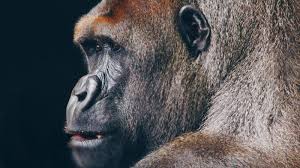
Koko died! But here's what you don't know.

Koko: July 4, 1971 - June 19, 2018
Koko was no ordinary gorilla... or maybe she was. She and a female chimpanzee named Washoe (who died in 2007) changed the way we think about "creatures" who are near our genetic make-up but really, not like us. We teach our pets to sit, stay, lie down and more and we give them credit for understanding us, communicating in all manners of obeying and knowing what we think, but we have given them less credit for being as much like us as Koko and Washoe have done.

Koko with caretaker Penny Patterson
From the Los Angeles Times: "Koko's instructor and caregiver, Francine (Penny) Patterson,  reported that Koko was able to understand more than 1,000 signs of what Patterson calls "Gorilla Sign Language (GSL) in contrast to other experiments attempting to teach sign language to non-human primates. Patterson simultaneously exposed Koko to spoken English from an early age. It was reported that Koko understood approximately 2,000 words of spoken English, in addition to the signs.

"I knew the two great apes when I was young and they were young," says Patterson, "and I've closely followed the scientific, philosophical and moral upheavals they precipitated over the last five decades. In the 1960 and "70s, they learned to use American sign language, and they came to understand that words could be combined to convey new meanings. It threw the scientific world into a tizzy, implying that sentience and language were not ours alone, that there was a continuum in higher mental abilities that linked animals and humans."

There are some scientific disbelievers but Patterson makes a strong case. And so do the many who have seen, interacted and conversed with Koko. First it was Washoe who noted a bird on the water and signed "bird" and "water." The schentific question was: Is Washoe simply noting bird and water separately or, not knowing the term, putting the two together to say water bird?

Not being a scientist, I vote for Washoe noting "water bird," and thus, cognitively, thinking like a human might. Then there was Koko who noted a ring on the finger of a visitor. Not knowing the word for ring, Koko signed "finger" and then "bracelet." Pretty good, huh?

This, from Wikipedia, was pretty convincing: 
Researchers at The Gorilla Foundation said that Koko asked for a cat for Christmas in 1983. Ron Cohn, a biologist with the foundation, explained to the Los Angeles Times that when she was given a lifelike stuffed animal, she was less than satisfied. She did not play with it and continued to sign "sad". So on her birthday in July 1984, she was able to choose a kitten from a litter of abandoned kittens
Koko selected a gray male Manx and named him "All Ball". Penny Patterson, who had custody of Koko and who had organized The Gorilla Foundation, wrote that Koko cared for the kitten as if it were a baby gorilla. Researchers said that she tried to nurse All Ball and was very gentle and loving. They believed that Koko's nurturing of the kitten and the skills she gained through playing with dolls would be helpful in Koko's learning how to nurture an offspring. 
In December 1984, All Ball escaped from Koko's cage and was hit and killed by a car. Later, Patterson said that when she signed to Koko that All Ball had been killed, Koko signed "Bad, sad, bad" and "Frown, cry, frown, sad". Patterson also reported later hearing Koko making a sound similar to human weeping. 
 In 1985, Koko was allowed to pick out two new kittens from a litter to be her companions. The animals she chose, she named "Lipstick" and "Smoky", were also Manxes. Koko picked the name after seeing the tiny orange Manx for the first time. When her trainer asked the meaning of the name, Koko answered, Lips lipstick.To celebrate her birthday in July 2015, Koko was presented another litter of kittens. Picking two, she named them Miss Black and Miss Grey.

In her lifetime Koko was visited by many notables. You'd have a hard time convincing Robin Williams, Fred Rgers, Betty White, William Shatner, Fle, Leonardo DiCaprio, Peter Gabriel and Sting that Koko was not reasonably fluent, understanding, charming, gentle and more.
Another indication that Koko and others before her are like us in many ways... they have been know to lie and cuss... but in a very modest and admitting way. 
And then who could deny that Jane Goodall didn't understand this potential many years earlier. "You cannot share your life with with a dog, as I have done in Bournemouth, or a cat, and not know perfectly well that animals have personalities and minds and feelings."
There are a number of other bonobos, chimpanzees, gorillas and orangutans that have shown advancing skills but it is Koko that has been the star of them all. She will be missed.

Here's a documentary on Koko and her amazing life... and the people around her.

Tuesday, June 26, 2018

I just saw the world... and we almost died together!


I just saw the world... and we almost died together!


True story:

I'm a people watcher believing we are a fascinating observable group. So time spent in a crowded airport on my way to Dallas recently was no problem,  It was a typical scenario with people like my wife and I visiting grandchildren, business women and men on smartphones and computers, families with small children perhaps going to Disney World, young, old, stressed loners rushing to the gate, happy travelers laughing and giggling, African American, Asian, Hispanic, caucasion, Muslim and I'm sure, many denominations of faith or not, LGBT and other, tanned and tattooed, bikers, military and Boy Scouts, those who love, those who hate, those who don't care, dogs, cats and more, much more.

Hello world!

A random group of us--144 to be exact, plus crew got on a plane destined for Dallas. The plane had an emergency. Nose wheel broke. Firery crash or what?

When we burned off the extra weight of fuel for two hours circling around Raleigh at 3,000 feet altitude, it was decided we would fly by the control tower at 200 feet, ala Tom Cruise in Top Gun, and the people there would scope us out.

We studied the brace positions as requested. We were advised the fire trucks, ambulances and rescue personnel would be visible beside our runway on the fly-by. The airport was on hold and the TV crews were filming--just in case. We made the television news as "a plane in trouble," perhaps like the movie "Airplane!" but not as funny.

Would we die together as people burned or mangled with bodies strewn everywhere? Or would we survive and continue to define ourselves as 'different?"

As the TV story showed, 144 people and crew landed safely. That's the tip... 144 people and crew, not 144 souls. and crew However, when you think about it, 144 souls and crew does unite us far more than just 144 people and crew. Maybe souls is good in every case.

I'm sure we in the plane were all different in lots of ways, just like as we were when we walked the terminal to board. But we all shared the same fate, whatever it would be, in the end. One for all and all for one.

At that moment, we were much more the same than different. And we lived. All of us.

Our world is not very different from a busy airline terminal.... or a plane. If given the option, we see ourselves different in too many ways. We fight wars, shoot, kill, hate, judge, bleed, but to what end? We really are one... as in the plane... as in the world sharing the air we breathe. 

You'd think we could do better... can't we?

At this moment, we all shared our world,: American Airlines MD-80 to DFW.


Friday, June 22, 2018

Elvis died in 1977...or did he?

The King at a young age


In looking back, I found something I wrote 10 years ago when "The King's" craze was nearer it's peak. I found it absolutely amazing in how prophetic I was.

When Elvis Presley died in 1977, there were 48 Elvis impersonators. In 1996, there were 7,328. If this rate of growth continues, by the year 2012, one person in every four will be an Elvis impersonator. And it will be just our luck that one of those will someday run for President.

Whoa! Was I close or what? Today, there are at least four Elvis impersonator associations: The Professional Elvis Impersonators Association (PEIA), The Association of Professional Elvis Presley Tribute Artists (APEPTA), Elvis Presley Impersonators International Association (EPIIA) and the National Association of Amateur Elvis Impersonators (NAAEI). I'm not kidding.

Now about one of them running for President, the only person I could rule out for sure last election was Dennis Kucinich. He just didn't have the voice.


Ten years later, I was sadly proven right.

Wednesday, June 20, 2018

Two examples of perverted logic (NOT COUNTING POLITICS) both proving It really is "Nuts Out There."

Good example No. 1 (in the comics):

You read the comics in your local newspaper? (If you ask, "What's a newspaper," you are under 30... not that there is anything wrong with that.) Well, you should.

The comics are a wonderful parody of life, lest you take life too seriously. We saw ourselves in almost every Seinfeld T.V. episode which ran for an astounding nine years. ("What's T.V. and who is Seinfeld? C'mon, play along with me just for this blog post.)

Jeremy and his best friend Hector
Zits is a comic strip by Jerry Scott and Jim Borgman. It's main character, Jeremy, age 16, sees life as a high school sophomore who pretty much knows all that is important to him. So he asks:

"Dad, can I have twenty bucks?"

"No, but if you wash my car I'll pay you twenty."

"Okay, but the last time I washed your car it cost you fifty dollars to have the scratches buffed out."

"Good point. Here's twenty bucks to leave it alone."

"Make it thirty and I won't vacuum it, too."

Best example No. 2 (in real life):

Billie Sol Estes was a close friend of President Lyndon Johnson, our 36th president. Estes was a colorful character alleged to be involved in several crimes of fraud and deception. He did serve prison time more than once.

In 1962, information came to light that Estes had paid off four Agriculture officials for grain storage contracts in silos he did not have. He was noted (at least by comedians of the day) to probably have said (paraphrasing) "If you are going to pay a farmer not to grow corn, then you should pay me for the silos not to store it in."

And if that doesn't make some perverted sense, then I'd eat my hat... if I had one.

Tuesday, May 29, 2018

What goes through your mind in the 6.5 seconds while falling 500 feet to your death?


Actually, more... much more than you would think.

Backstory: A recent fictional article (Without Inspection by Edwidge Danticat) in The New Yorker began: " It took Arnold six and a half seconds to fall five hundred feet. During that time, an image of his son, Paris, flashed before his eyes."

Six full pages later, Arnold hit the pavement and died. That's about one page of his life per second... a lot to think about.

While the article is a good fictional read, the six written pages of Arnold's thoughts aren't at all unrealistic according to the research done on that time between awareness of impending death and the live mind. It takes a lot more time to read his thoughts than for Arnold to think them. And in this scenario, it is a really clever way to tell a compelling story.

Actually, if you are (or are not) a fan of television's The Big Bang Theory, the opening is a grand example of how to think back on 14 million years in 23 seconds, but then, that's technology for you. What your mind can do is even more mind-boggling.

This 'more-common-than-you-would-think' happening is scientifically studied as a Near Death Experience: "A personal experience associated with death or impending death." Neuroscience research says "... a NDE is a subjective phenomenon resulting from a disturbed bodily multiscensory integration that occurs during life-threatening events." 

In other words,  your brain says "Oh my God, what is happening to me?" and kicks into a state of hyperactivity and awareness allowing all sorts of things to happen in your mind. It is often referred to as "your life passing before your eyes' before you die... or fearing you are going to die, It is a state of hyper-awareness.

"What Are You Afraid of?" a column in The Atlantic magazine asks: "One reason we struggle with fear is that we're simultaneously too primitive and too evolved for our own good... Our brains are ruthlessly efficient. Signals speed to the threat-sensing amygdala ( two parts of the brain involved in experiencing emotions) within 74 milliseconds of the slightest hint of danger. This speed has, over eons, helped save us from extinction. But it's also led to plenty of false alarms."  Maybe better safe than sorry, huh brain?

One man writes of his NDE which kicked in as his vehicle skidded on 'black ice' when, in mere seconds, he takes stock of all that is happening as he slides helplessly out of control on a crowded expressway. He reviews all of his options and projects who he might hit and where he might wind up, at the same time, turning to check on his young daughter riding behind him who, to his horror, has unfastened her infant seat belt reaching for some skittles, and moves to try to protect her while he fears they may slide into a guardrail--all in an instant. Post crash, they luckily avoided any collision and missing the guardrail, smashed into the hillside. Reflecting back, he is aware that he saw everything as if in slow motion, including his daughter's six skittles and that he can remember their individual colors and positions on the seat.

So if you forgot to take those scrapbook pictures to look back on, don't worry about it. Odds are, you'll have another great chance, but look fast, you only have a few seconds. What makes me think I am expert enough to write about this? Well, just last week, I saw Einstein's brain... really, so there! (A slice of it is actually on permanent display at the Mutter Museum in Philadelphia.)

Actually, comedian Emo Phillips has it right: "I used to think that the brain is the most wonderful organ in my body. Then I realized who was telling me this."


Thursday, May 24, 2018

FACT: Life is sexually transmitted

So admit it, love makes the world go round.


For as long as there has been life on earth, we have been trying to quantify love. It's an emotion we have all experienced times in our lives... and lucky ones seem to have it constantly on their shoulders. One would think that with such a familiar concept, researchers would agree on what constitutes love and how to measure it. That has not been the case... at least, not until now.

With a little research (Google), a few older recollections, scientific advances of quantum knowledge and wonderful personal experiences, I think I've got it! Just take a look at the song lyrics written way back in 1932, just as America was emerging from the disasterous Great Depression. Songwriter Irving Berlin (who also wrote White Christmas, Alexander's Ragtime Band, Easter Parade, God Bless America, There's No Business Like Show Business and other older classics) realized the only thing most of the country had left to give was love... and this song caught the spirit of that emotion.

HOW DEEP IS THE OCEAN

How can I tell you what is in my heart?
How can I measure each and every part?
How can I tell you how much I love you?
How can I measure just how much I do?

How much do I love you?
I'll tell you no lie
How deep is the ocean?
How high is the sky?

How many times a day do I think of you?
How many roses are sprinkled with dew?

How far would I travel
To be where you are?
How far is the journey
From here to a star?

And if I ever lost you
How much would I cry?
How deep is the ocean?
How high is the sky?

That sentiment has been played forward by Billie Holliday, Etta James, Peggy Lee, Judy Garland, Lianah, Diana Krall and many others. It has molded into a jazz standard and made more than a few people cry. So how do we measure something so seemingly intangible? We don't... but we're humans so we still try to quantify.

  • So, how deep is the ocean? (Almost seven miles deep in the Pacific's Marian Trench near Guam.)
  • How high is the sky? (Latest guess, 156 billion light years across... with a scientific belief that there is more... much more.) 
  • How far is the journey from here to a star? (Closest star is our sun, a mere 140 million miles more or less, but we're talking love here... so let's hit it out of the solar system and travel to Proxima Centauri,  4.22 light years from Earth--or about 26 trillion miles.)
  • And if I ever lost you, how much would I cry? (A Pacific Ocean-full... or about 1/3 of all the water on the planet. Better hydrate.)
So that's love. See how simple it is to express the most profound feeling we humans know? What it means is that emotion knows no bounds. But in every lifetime, it seems to rise and fall like the stock market... which is good, right? For how would we appreciate the highs if we didn't have something less to compare them with?

That's today's lesson. Don't try to make sense of it. Just do it because, as another song says, love makes the world go round. And we sure could use more of that.